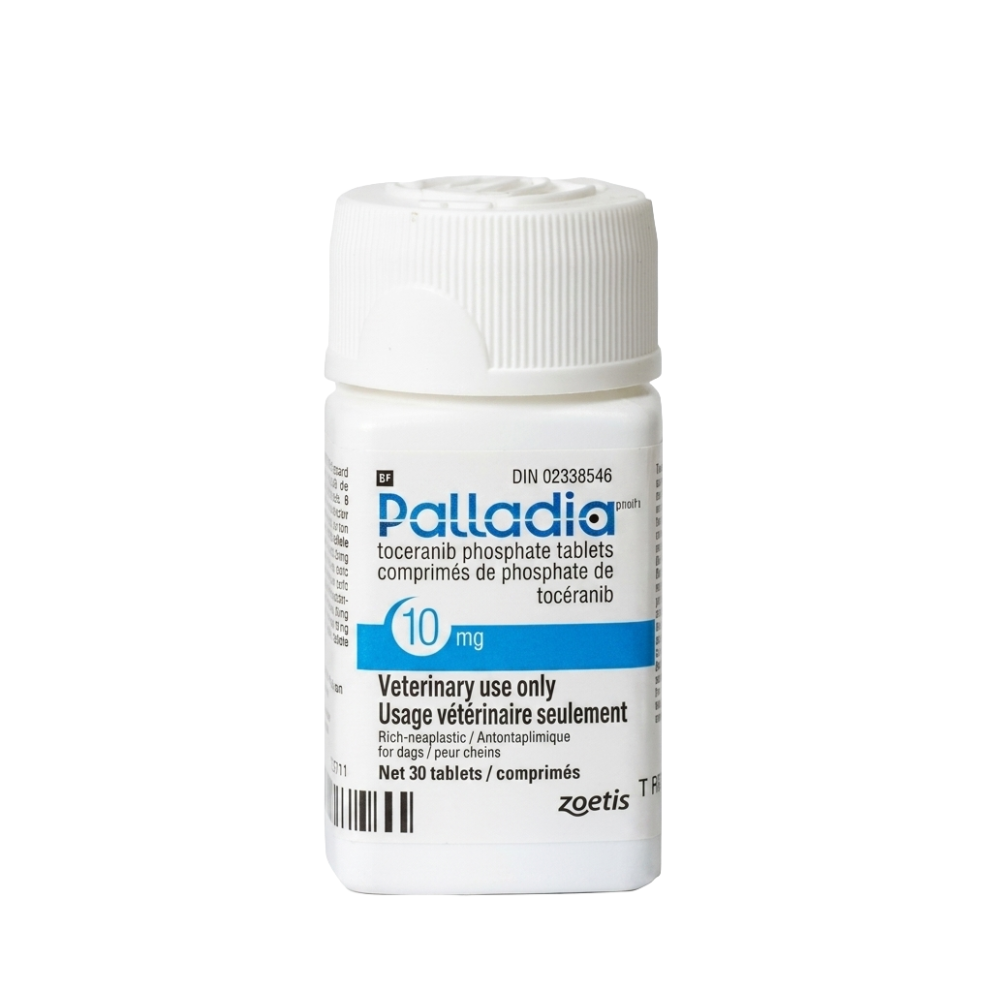
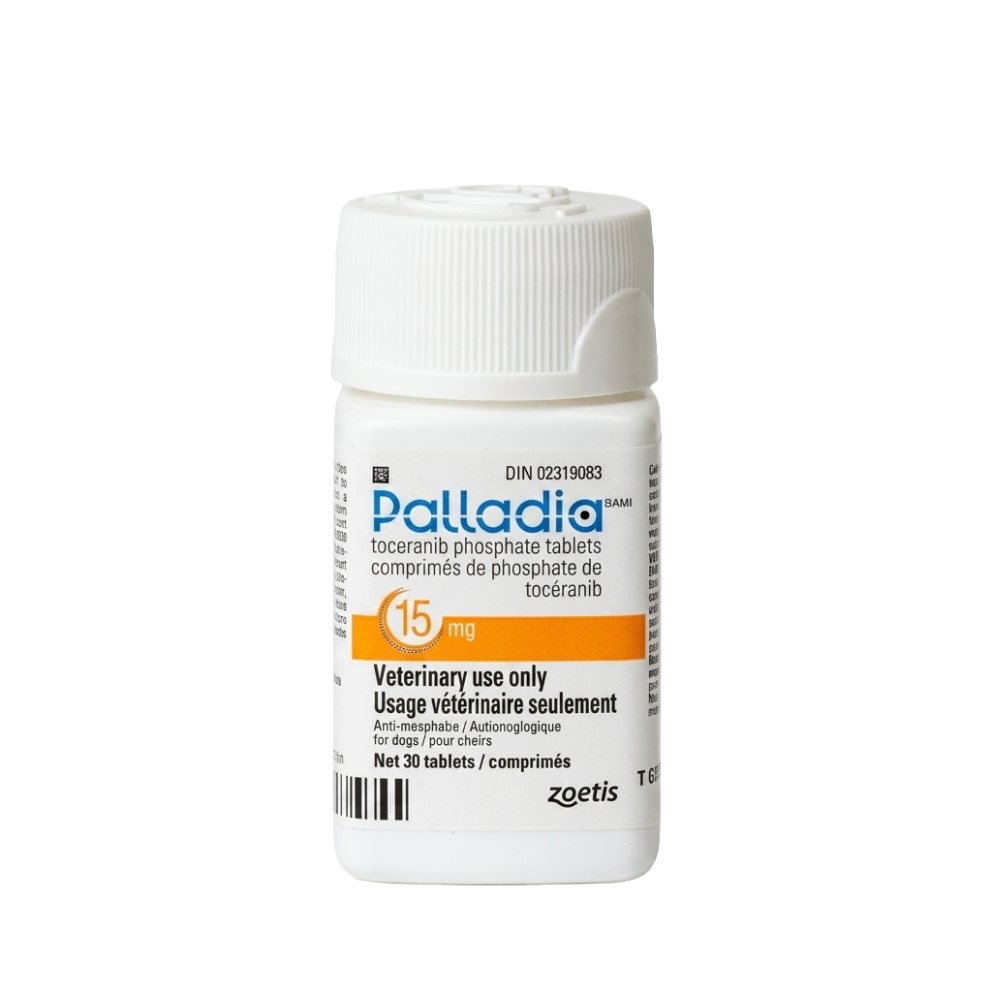
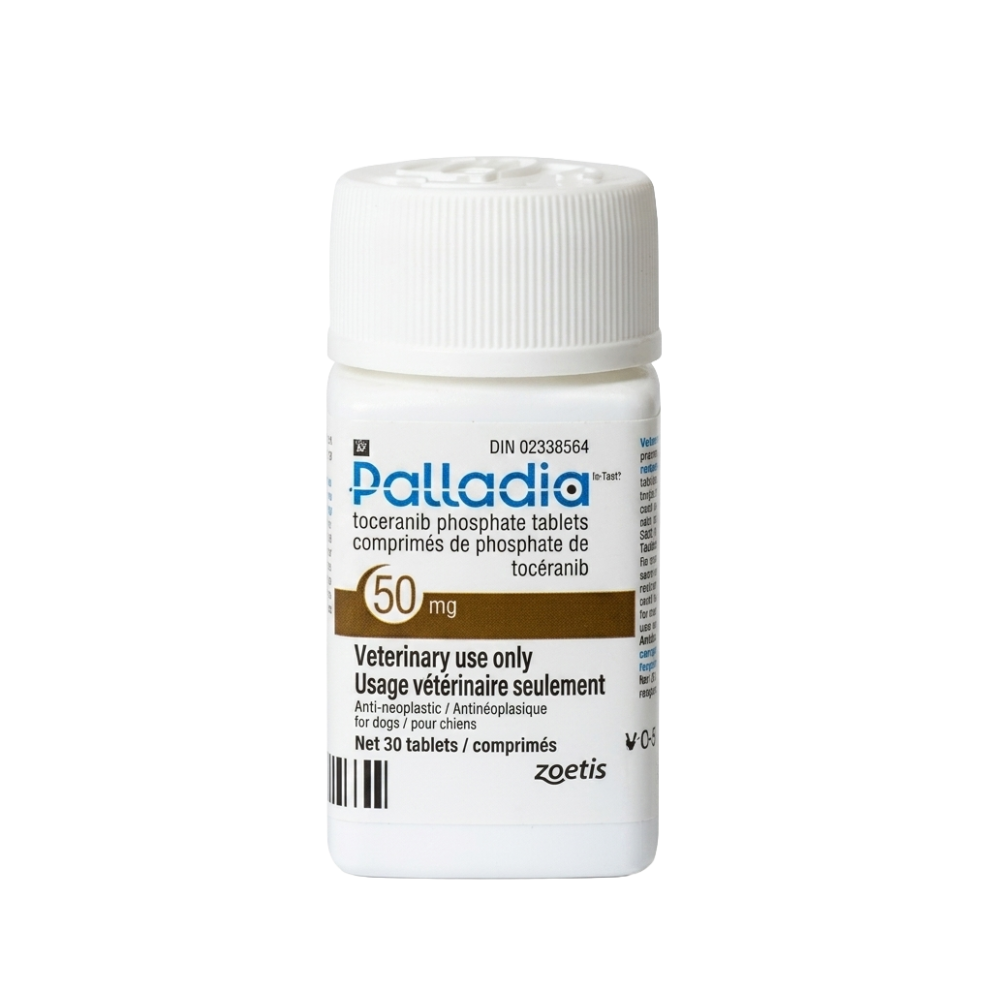
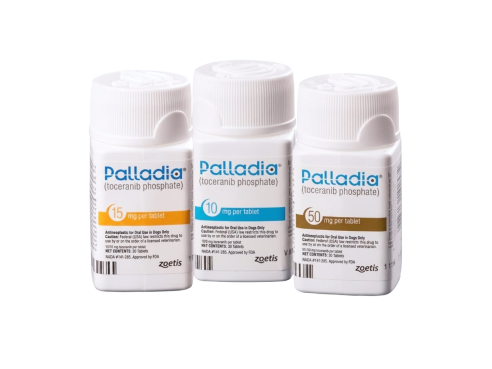
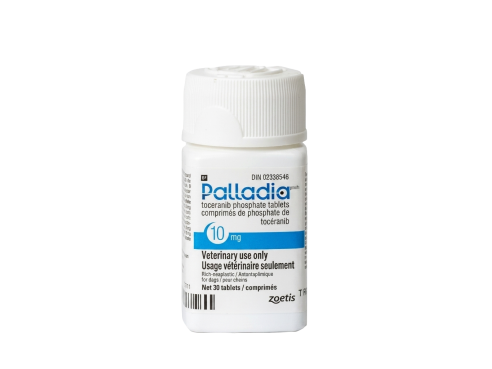
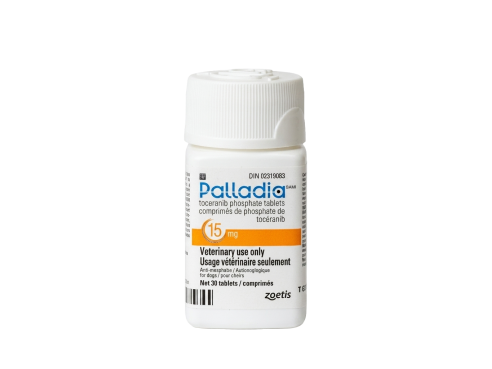
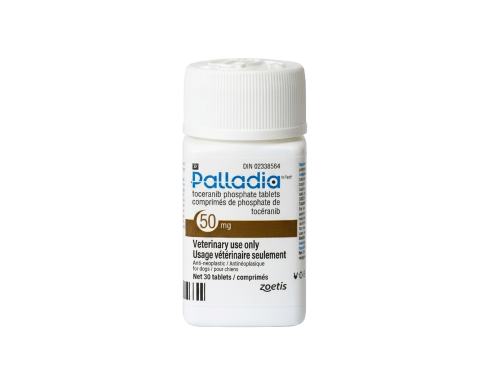
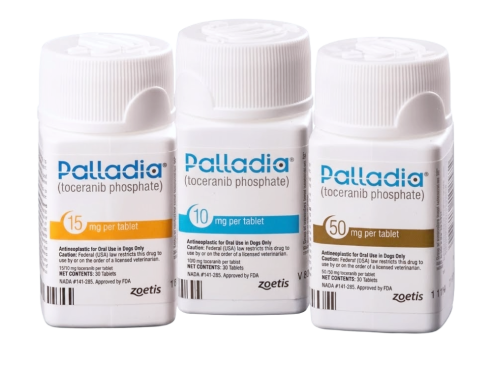
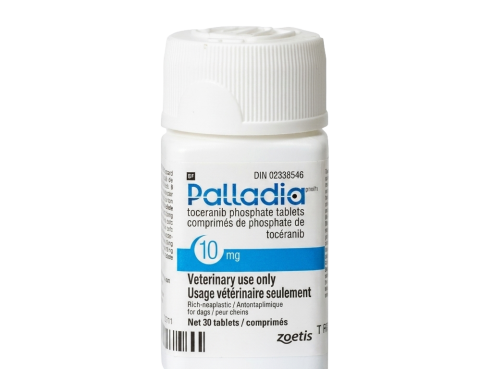
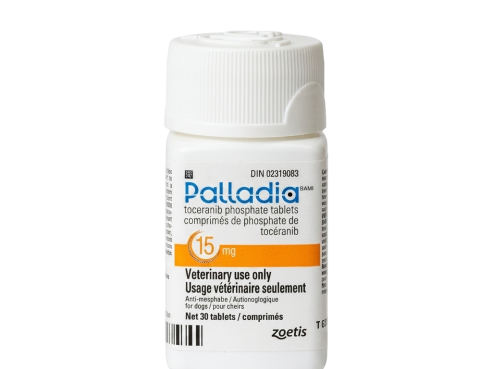
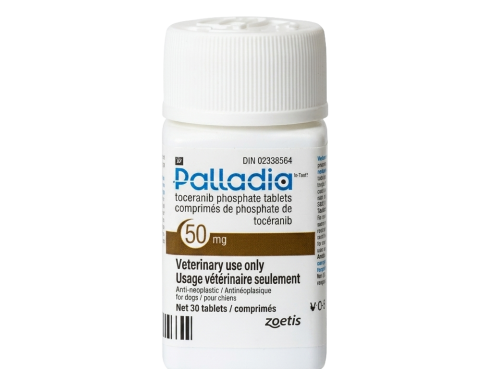
Primary Uses
- Mast Cell Tumors (MCT): It is primarily indicated for treating non-resectable Patnaik grade II or grade III recurrent, cutaneous mast cell tumors (a type of skin cancer) with or without local lymph node involvement.
- Off-Label Cancers: On a veterinarian's advice, it is also used to manage other solid tumors, such as neuroendocrine tumors, carcinomas, gastrointestinal stromal tumors (GIST), and heart base tumors.
How to use and Warnings
- Frequency: It is administered orally every other day (once every 48 hours).
- With Food: It can be given with or without food. Administering it in the morning with a small meal or hiding it inside a treat can reduce nausea and ensure the dog swallows the whole dose.
- Do Not Split: Tablets must be swallowed whole to preserve the protective film coating. Never crush, break, or split them.
- Monitoring: Your vet will require weekly checkups for the first 6 weeks, and checkups every 6 weeks thereafter to adjust dosages or pause treatment based on how your dog tolerates the drug.
Important Safety Handling and Warnings
Because Palladia is a chemotherapy agent, humans must practice strict safety habits when managing it:
- Wear Gloves: Always wear protective gloves when handling the tablets (especially if they are moistened or spit out) or when cleaning up your dog's stool, urine, or vomit.
- Waste Disposal: Seal all cleaning paper towels and pet waste inside a separate plastic bag before throwing it in the household trash. Wash soiled bedding or laundry completely separate from human clothing.
- Pregnancy Warning: Pregnant, nursing mothers, or dog trying to conceive should never handle this medication or come into contact with the dog's bodily waste. It prevents blood vessel formation and can cause severe birth defects.
- Licking: Avoid skin contact and do not let your pet lick you for at least the first hour after they ingest the tablet.
Potential Side Effects
Most side effects can be managed with veterinary guidance, dose modifications, or temporary breaks:
- Gastrointestinal Distress: Decreased appetite, vomiting, diarrhea, weight loss, or black, tarry stools (indicating GI bleeding).
- Systemic Issues: Lethargy, lameness or joint weakness, and changes in hair or skin pigment.
- Contraindications: Palladia must not be used in dogs intended for breeding, pregnant/lactating dogs, puppies under 2 years old, or dogs weighing less than 3–5 kg.